
The Science of Marine Biodegradation - A State-of-Science Assessment
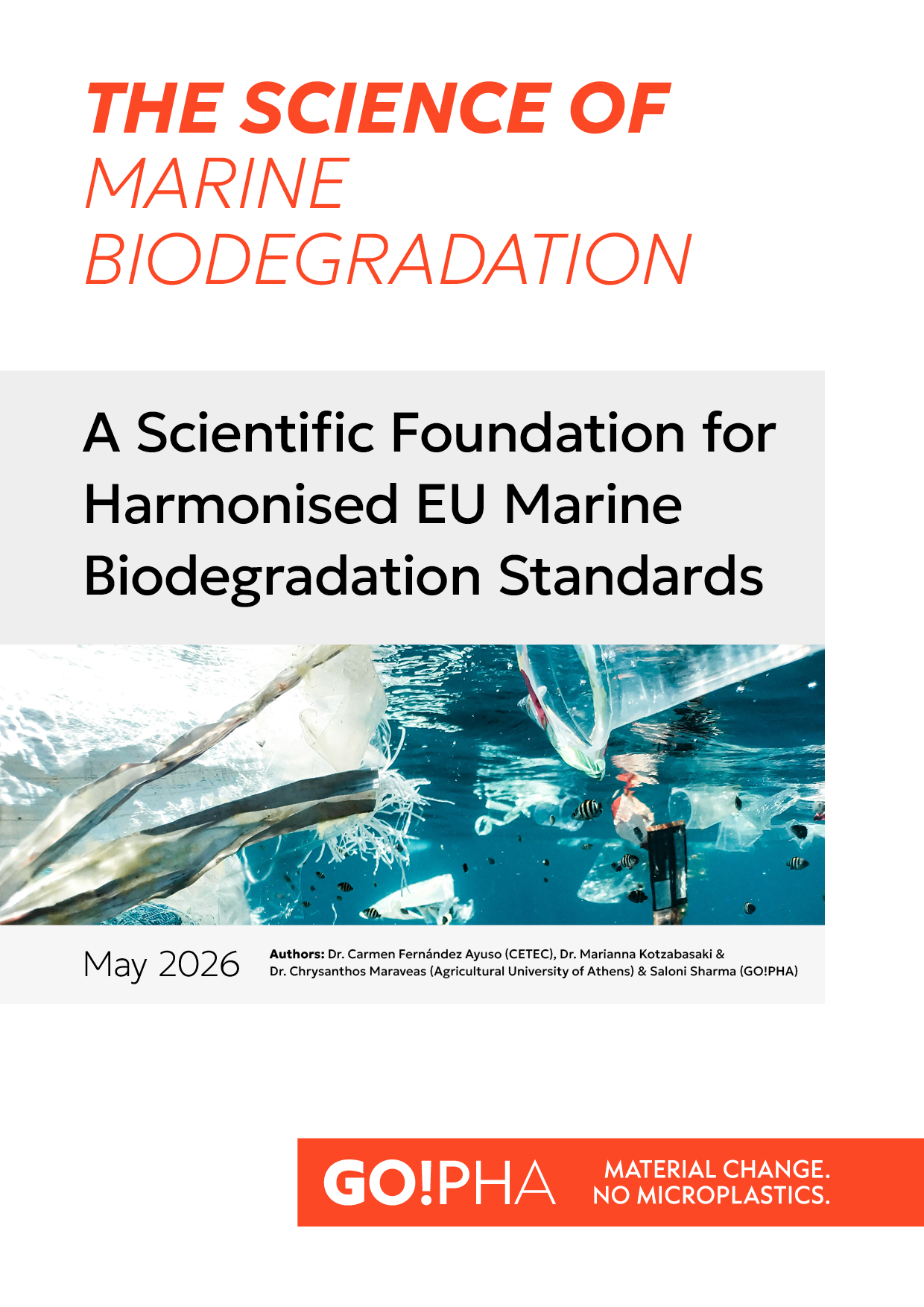
A scientific foundation for harmonised EU marine biodegradation standards
The 2019 EU Single-Use Plastics Directive (SUPD) set out to reduce plastic pollution in marine environments, but a critical gap remains: there is currently no harmonised EU standard defining what it means for a material to be truly marine biodegradable. As the SUPD moves toward its 2027 evaluation, the scientific groundwork to fill that gap is now firmly in place.
Over the past decade, knowledge on marine biodegradation has advanced substantially. Scientists now have a much clearer understanding of how materials break down across different marine habitats, what environmental factors determine degradation rates, and how to measure and validate biodegradation rigorously. In parallel, materials innovation has kept pace: a new generation of bio-based polymers has moved from laboratory curiosity to commercial reality, with validated performance in real marine conditions. The science and the materials are ready. What has been missing is the policy framework to put them to work.
To map this evidence base, researchers from CETEC and the Agricultural University of Athens, together with GO!PHA, conducted a comprehensive review of the current state of science on marine biodegradation. The brief synthesises recent advances in material science, microbial ecology, standardisation, and policy to provide policymakers with a clear picture of what is known, what has been validated, and what a credible EU standard should look like.
The review confirms that marine biodegradation is not a fixed property of a material, but a system-dependent process shaped by temperature, microbial communities, habitat, and product formulation. This means that not all materials labelled biodegradable perform equally in marine conditions. Among current alternatives to conventional plastics, polyhydroxyalkanoates (PHAs) and cellulose-based materials emerge as the most viable options with consistent, validated marine biodegradation across a range of environments, including cold deep-sea conditions. Innovation in material science keeps evolving and more options are expected to come to market.
The brief identifies the key indicators any future EU standard should include: mineralisation rate, physical disintegration, ecotoxicity of degradation products, and full chemical characterisation of additives and coatings. It also makes the case for a tiered assessment approach moving from laboratory testing through mesocosm simulation to real-world field validation, an approach increasingly supported by international scientific consensus.
The scientific foundation is ready and the materials exist. The 2027 SUPD evaluation is the moment to act — to establish harmonised, rigorous standards and embed them in policy frameworks that give industry clarity and give the ocean real protection.